
Homepage
The first impression that determines
whether a visitor explores
or bounces.
We design homepages that communicate
what your product
does, who it’s for,
and
why it’s different — above the fold, in under
5 seconds.

SaaS website design agency
SaaS marketing site design that converts —
homepage, pricing, campaign
microsites,
and the landing pages behind them.
Same system as the product.
WHAT WE DESIGN
I.
The first impression that determines
whether a visitor explores
or bounces.
We design homepages that communicate
what your product
does, who it’s for,
and
why it’s different — above the fold, in under
5 seconds.
The most anxiety-inducing page on any
SaaS site. We design pricing
pages
that
reduce decision paralysis through clear tier
comparison,
feature matrices,
and
contextual social proof that validates
the investment.
Campaign-specific pages optimized for
a single conversion goal.
We design
landing
pages for product launches, feature
announcements,
webinar signups,
and
paid ad campaigns.
Pages that show your product in action
without requiring a signup.
Interactive
demos, annotated screenshots, and video
walkthroughs that
let
visitors
experience
value before committing.
Content pages designed for readability, SEO,
and conversion.
Author pages,
category
navigation, and contextual CTAs that turn
readers into leads.
DESIGN PRINCIPLES
ii.
A SaaS website converts when every
element
on the page moves the visitor
toward one clear
next
step — and stops
competing for attention
with
everything
else. It’s a conversion engine,
not
a brochure: hero copy, social-proof
placement, CTA
hierarchy, and load speed
each either advance
a signup or leak it.
The patterns that work for SaaS
specifically —
and that generic web
agencies
routinely miss —
come down
to four.
Each page has one primary action. Secondary
CTAs exist but
don’t compete.
Visitors always
know what to do next.
Logos, testimonials, and case study links placed
at decision points —
not clustered in a single
section visitors scroll past.
Different CTAs for different visitor intents. A visitor
on the pricing
page gets
“Start free trial.” A visitor
on a case study gets
“Request a demo.” Same goal,
different entry angle.
SaaS buyers are impatient. Pages load in under
2 seconds. No hero
videos that buffer.
No animations that delay content. Performance
is a design choice.
SCOPE
iii.
Some teams come to us wanting
a “brand
refresh”
when what they actually need
is a website
that
converts. We focus
on conversion-first design
and
build the
visual
language to serve that goal.
If you
need a full
brand identity (logo, guidelines,
brand
system),
we can do that too —
but we
recommend
doing
it as a separate
engagement
so neither
project
gets diluted.
OUR PROCESS
iv.
Competitive analysis, messaging review,
conversion
audit of current
site (if exists),
and page map.
We define what pages you
need
and what each
page
needs
to accomplish.
FROM [1] WEEK
Wireframes → visual design → responsive
design.
Each page designed
at desktop and
mobile.
Iterative
review at every stage.
FROM [3-5] WEEKS
Design QA during development. We review
the built
site against
the designs and flag
discrepancies.
Optional: we build in Webflow
if your team prefers
a no-code CMS.
FROM [1-2] WEEKS
FAQ
v.
A SaaS website agency designs for conversion against a free-trial or demo funnel —
not for a brochure. That means pricing-page psychology, feature-gated CTAs
matched to visitor intent, social proof placed at decision points, and sub-2-second
load as a design constraint. It also means understanding how SaaS buyers actually
evaluate software (comparison-shopping, trial intent, procurement scrutiny)
and designing the page to move a research-mode visitor toward signup. A general
agency optimizes for looking good; a SaaS agency optimizes for trials started.
A SaaS website agency designs for conversion against a free-
trial or demo funnel — not for a brochure. That means pricing-
page psychology, feature-gated CTAs matched to visitor intent,
social proof placed at decision points, and sub-2-second load
as a design constraint. It also means understanding how SaaS
buyers actually evaluate software (comparison-shopping, trial
intent, procurement scrutiny) and designing the page to move
a research-mode visitor toward signup. A general agency
optimizes for looking good; a SaaS agency optimizes for trials
started.
A SaaS website agency designs for conversion against a free-trial or demo funnel — not for
a brochure. That means pricing-page psychology, feature-gated CTAs matched to visitor intent,
social proof placed at decision points, and sub-2-second load as a design constraint. It also
means understanding how SaaS buyers actually evaluate software (comparison-shopping, trial
intent, procurement scrutiny) and designing the page to move a research-mode visitor toward
signup. A general agency optimizes for looking good; a SaaS agency optimizes for trials started.
A SaaS website agency designs for conversion
against a free-trial or demo funnel — not
for a brochure. That means pricing-page
psychology, feature-gated CTAs matched
to visitor intent, social proof placed at
decision points, and sub-2-second load as
a design constraint. It also means
understanding how SaaS buyers actually
evaluate software (comparison-shopping, trial
intent, procurement scrutiny) and designing
the page to move a research-mode visitor
toward signup. A general agency optimizes for
looking good; a SaaS agency optimizes for
trials started.
A typical engagement runs from 5–8 weeks: roughly one week of strategy
(competitive analysis, messaging, conversion audit of the current site, page map),
starting at 3–5 weeks of design (wireframes through responsive visual design,
reviewed iteratively), and 1–2 weeks of build support and design QA. The exact
timeline depends on page count and whether you need just the core marketing
pages or a fuller site with product tours, resources, and campaign landing pages.
A typical engagement runs from 5–8 weeks: roughly one week
of strategy (competitive analysis, messaging, conversion audit
of the current site, page map), starting at 3–5 weeks of design
(wireframes through responsive visual design, reviewed
iteratively), and 1–2 weeks of build support and design QA.
The exact timeline depends on page count and whether you
need just the core marketing pages or a fuller site with product
tours, resources, and campaign landing pages.
A typical engagement runs from 5–8 weeks: roughly one week of strategy (competitive analysis,
messaging, conversion audit of the current site, page map), starting at 3–5 weeks of design
(wireframes through responsive visual design, reviewed iteratively), and 1–2 weeks of build support
and design QA. The exact timeline depends on page count and whether you need just the core
marketing pages or a fuller site with product tours, resources, and campaign landing pages.
A typical engagement runs from 5–8 weeks:
roughly one week of strategy (competitive
analysis, messaging, conversion audit of the
current site, page map), starting at 3–5 weeks
of design (wireframes through responsive
visual design, reviewed iteratively), and 1–2
weeks of build support and design QA.
The exact timeline depends on page count
and whether you need just the core marketing
pages or a fuller site with product tours,
resources, and campaign landing pages.
We design every page at desktop and mobile and provide build-ready specs, then
do design QA during your team's development to catch discrepancies. If you prefer,
we also build in Webflow — useful for teams that want a no-code CMS they can
update without engineering. Either way, the design isn't thrown over a wall; we stay
involved through implementation so the built site matches what was designed.
We design every page at desktop and mobile and provide
build-ready specs, then do design QA during your team's
development to catch discrepancies. If you prefer, we also build
in Webflow — useful for teams that want a no-code CMS they
can update without engineering. Either way, the design isn't
thrown over a wall; we stay involved through implementation
so the built site matches what was designed.
We design every page at desktop and mobile and provide build-ready specs, then do design QA
during your team's development to catch discrepancies. If you prefer, we also build in Webflow —
useful for teams that want a no-code CMS they can update without engineering. Either way,
the design isn't thrown over a wall; we stay involved through implementation so the built site
matches what was designed.
We design every page at desktop and mobile
and provide build-ready specs, then do design
QA during your team's development to catch
discrepancies. If you prefer, we also build
in Webflow — useful for teams that want
a no-code CMS they can update without
engineering. Either way, the design isn't thrown
over a wall; we stay involved through
implementation so the built site matches what
was designed.
Usually not in the same engagement. Many teams ask for a “brand refresh” when
what they actually need is a website that converts — and bundling the two tends
to dilute both. We build the visual language to serve conversion here, and if you
need a full brand identity (logo, guidelines, system), we recommend running that
as a separate engagement so neither gets shortchanged. → /branding
Usually not in the same engagement. Many teams ask for
a “brand refresh” when what they actually need is a website
that converts — and bundling the two tends to dilute both.
We build the visual language to serve conversion here, and
if you need a full brand identity (logo, guidelines, system), we
recommend running that as a separate engagement so neither
gets shortchanged. → /branding
Usually not in the same engagement. Many teams ask for a “brand refresh” when what they actually
need is a website that converts — and bundling the two tends to dilute both. We build the visual
language to serve conversion here, and if you need a full brand identity (logo, guidelines, system),
we recommend running that as a separate engagement so neither gets shortchanged. → /branding
Usually not in the same engagement. Many
teams ask for a “brand refresh” when what
they actually need is a website that converts
— and bundling the two tends to dilute both.
We build the visual language to serve
conversion here, and if you need a full brand
identity (logo, guidelines, system), we
recommend running that as a separate
engagement so neither gets shortchanged.
→ /branding
We baseline before we design. Every engagement starts by capturing the current
numbers — activation, conversion, task success, error rates, time-to-value, support
volume — and agreeing which of them the work should move. After launch we
measure again at 30, 60, and 90 days and report the delta the same way we
publish case studies: baseline → result. If your analytics can't answer the question
yet, instrumenting them is the first task. We call the arc Baseline → Move → Prove —
and we're honest about attribution: design shares outcomes with product,
engineering, and market timing, so we tell you what design moved and what it didn't.
We baseline before we design. Every engagement starts
by capturing the current numbers — activation, conversion, task
success, error rates, time-to-value, support volume — and
agreeing which of them the work should move. After launch we
measure again at 30, 60, and 90 days and report the delta
the same way we publish case studies: baseline → result. If your
analytics can't answer the question yet, instrumenting them
is the first task. We call the arc Baseline → Move → Prove —
and we're honest about attribution: design shares outcomes
with product, engineering, and market timing, so we tell you
what design moved and what it didn't.
We baseline before we design. Every engagement starts by capturing the current numbers —
activation, conversion, task success, error rates, time-to-value, support volume — and agreeing
which of them the work should move. After launch we measure again at 30, 60, and 90 days and
report the delta the same way we publish case studies: baseline → result. If your analytics can't
answer the question yet, instrumenting them is the first task. We call the arc Baseline → Move →
Prove — and we're honest about attribution: design shares outcomes with product, engineering,
and market timing, so we tell you what design moved and what it didn't.
We baseline before we design. Every
engagement starts by capturing the current
numbers — activation, conversion, task
success, error rates, time-to-value, support
volume — and agreeing which of them
the work should move. After launch we
measure again at 30, 60, and 90 days
and report the delta the same way we publish
case studies: baseline → result. If your
analytics can't answer the question yet,
instrumenting them is the first task. We call
the arc Baseline → Move → Prove — and we're
honest about attribution: design shares
outcomes with product, engineering,
and market timing, so we tell you what design
moved and what it didn't.
That's more common than not having one. A design system that isn't working
is usually a governance problem, not a component problem — unclear ownership,
no contribution model, drift between code and design. We audit how the system
is actually used, then fix the operating model around it: decision rights, contribution
workflow, release cadence, documentation engineers accept. Sometimes
the answer is consolidating what you have rather than rebuilding — that's a cheaper
answer, and we give it when it's true. For teams preparing for AI tooling (Code
Connect, MCP, DTCG tokens), we assess AI-readiness specifically.
That's more common than not having one. A design system that
isn't working is usually a governance problem, not a component
problem — unclear ownership, no contribution model, drift
between code and design. We audit how the system is actually
used, then fix the operating model around it: decision rights,
contribution workflow, release cadence, documentation
engineers accept. Sometimes the answer is consolidating what
you have rather than rebuilding — that's a cheaper answer, and
we give it when it's true. For teams preparing for AI tooling
(Code Connect, MCP, DTCG tokens), we assess AI-readiness
specifically.
That's more common than not having one. A design system that isn't working is usually
a governance problem, not a component problem — unclear ownership, no contribution model,
drift between code and design. We audit how the system is actually used, then fix the operating
model around it: decision rights, contribution workflow, release cadence, documentation engineers
accept. Sometimes the answer is consolidating what you have rather than rebuilding — that's
a cheaper answer, and we give it when it's true. For teams preparing for AI tooling (Code Connect,
MCP, DTCG tokens), we assess AI-readiness specifically.
That's more common than not having one.
A design system that isn't working is usually
a governance problem, not a component
problem — unclear ownership, no contribution
model, drift between code and design. We
audit how the system is actually used, then fix
the operating model around it: decision rights,
contribution workflow, release cadence,
documentation engineers accept. Sometimes
the answer is consolidating what you have
rather than rebuilding — that's a cheaper
answer, and we give it when it's true.
For teams preparing for AI tooling (Code
Connect, MCP, DTCG tokens), we assess
AI-readiness specifically.
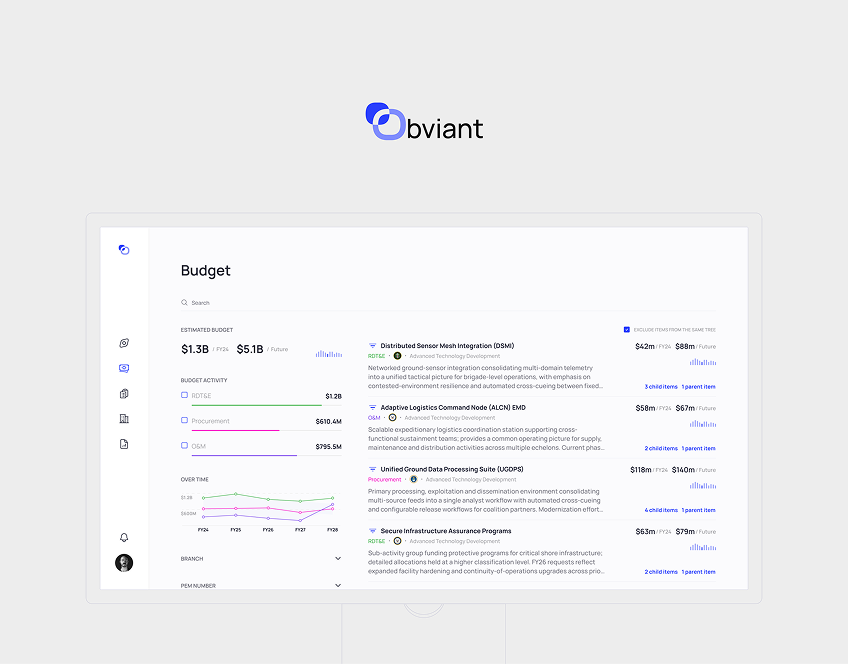
Government contracting platform redesign. Four federal datasets — budget, contract, program, organization — unified into one searchable interface for capture managers and BD teams.
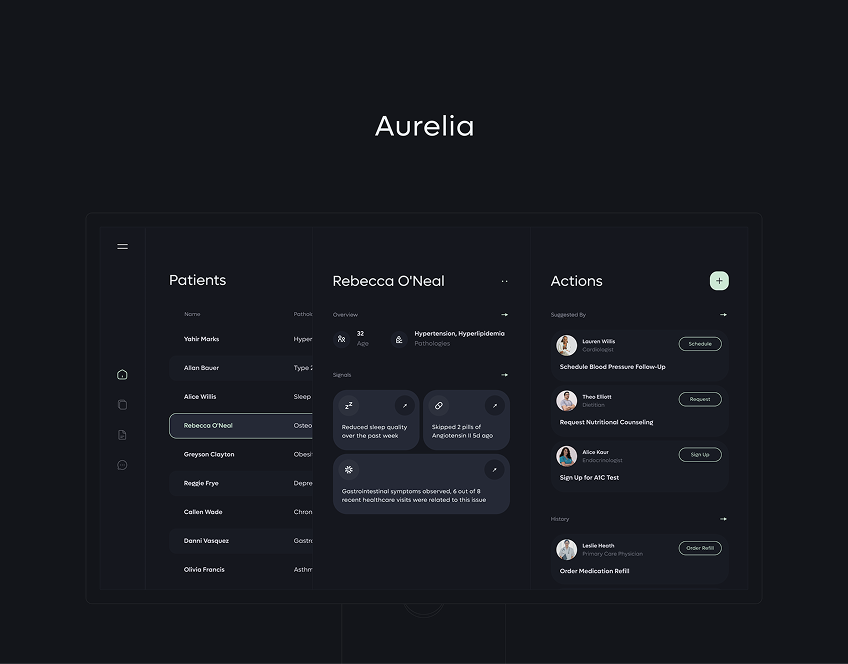
Full redesign of a dual-platform healthcare product for patients and providers. Patient onboarding completion: 24.6% → 43.9%. Provider core task: 11 → 5 steps. CSAT: 3.2 → 4.4/5.

EU accessibility audit for a workforce time-registration terminal. 210 WCAG criteria evaluated against three standards, severity-ranked, delivered as VPAT 2.5.
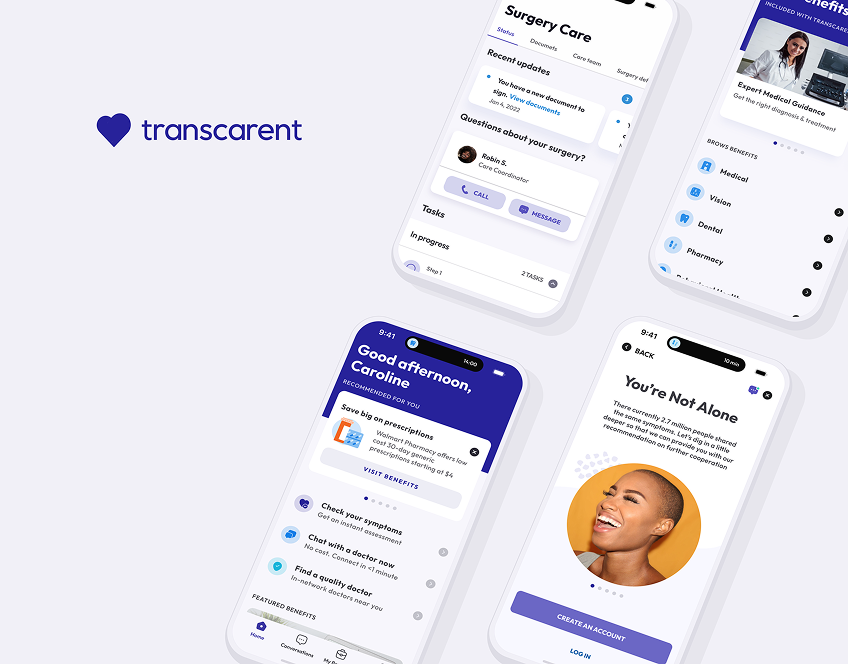
A consumer healthcare app integrating virtual care, providers, and local facilities, with a medicine-matching system. Result: 4.7 App Store rating, 24% saved by members on substitute medicines.