
A SaaS UX audit — sometimes called
a usability
audit —
is a systematic,
expert-led analysis of how
real users
interact
with your platform — where they
succeed, where they struggle,
and where
they leave.
It is not a design review
or a matter of taste.
We evaluate
the interface against established
usability
heuristics
and observed user behavior:
information architecture, task flows,
interaction
patterns, visual hierarchy,
and the accessibility
problems
that surface
while walking those flows.
Every finding
is evidence-
based and severity-rated,
and the output is a prioritized plan your
engineers
can act on.
ux audit agency
Identify friction.
Reduce
churn.
Find quick wins.
Our UX audit services find the problems costing
you users and revenue —
and deliver a prioritized
roadmap to fix them.
From two weeks,
scoped to your product.
THE PRODUCT AUDIT
II.
What is a SaaS UX audit?
Four layers of the interface, evaluated
against
usability heuristics
and observed
user behavior.
-
Information architecture and navigation.
How the product
is organized, whether users
can
find what they need,
and where
the structure
works against the jobs they
came to do. -
Task flows, end to end. Every step required
to complete
the jobs your product exists for —
where users hesitate,
backtrack, or abandon.
Error states, empty states,
and the edge cases
that only appear in production. -
Interaction patterns and interface consistency.
Whether similar actions
behave the same way
across
the product, whether feedback
arrives
when the user
expects it, and where
accumulated inconsistency
is costing
comprehension. -
Accessibility issues surfaced during flow
testing.
Keyboard traps,
missing labels, contrast
failures,
and focus-order problems found while
walking
the flows — enough to tell you whether
a compliance
exposure
exists and roughly
how
large it is.
Every finding is plotted on two axes —
implementation effort
and expected
user/business
impact. The output
is a ranked
action plan,
not a document
to file:
-
Effort × Impact Matrix — a visual prioritization
of every
finding,
so your engineering team
knows
exactly
what to fix first and why. -
Severity-rated UX audit report (critical, high,
medium, low)
with annotated screenshots
and recommended solutions. -
A 45-minute findings readout with your team —
we walk through
the top findings live and
answer
questions, so the people
who won’t read
the report
still hear the diagnosis. -
Remediation roadmap with estimated effort
per fix —
designed to slot
directly into your
sprint planning. -
Three “quick wins” you can implement within
the first
week
— the top-right quadrant
of the matrix (high impact,
low effort). -
A recorded baseline — your current numbers
written
down from your
existing analytics,
so the next phase can
be measured against
something.
Recording, not analysis.
From $8,000 for a single product, from two
weeks.
Larger surface
areas — multi-product
suites, several
distinct user types, deep
compliance scope —
take longer and
are scoped on a call before
we quote.
You get the price and the dates before
anything
is signed.
Staging environment access or Figma files.
Read access
to your analytics if you
have it —
we record the current numbers
as a baseline,
not as a separate analysis.
A 30-minute stakeholder
interview
to understand business context.
A UX audit tells you what is wrong with
the
interface
and what
it is costing you
in user terms.
Three things sit outside it,
each because they need
a different kind
of access or a different
depth
of analysis:
-
Conformance testing — establishing
WCAG 2.2 AA
conformance criterion
by criterion,
with assistive-
technology testing
and VPAT
documentation,
is its own
engagement
with its own timeline. -
Funnel analysis — activation rates, churn drivers,
trial-to-paid conversion,
and LTV/CAC require
analytics access and cohort-level work. -
Component-level system review —
token
architecture,
contribution model,
and governance
are assessed separately.
We sell the diagnosis, not the redesign.
You are buying knowledge
about your
product:
what is actually broken, which
numbers
it affects,
and what to do in what
order. If we think you
shouldn’t
redesign,
the report will say so.
SPECIALIZED AUDIT TYPES
III.
Deep-dive audits
for specific challenges
Accessibility audit
Facing EAA or WCAG deadlines?
We test
your platform against
WCAG 2.2 AA by hand,
criterion
by criterion, and deliver severity-
ranked
findings with VPAT documentation
your
procurement
team can file. Conversion audit Users signing up but not converting?
We analyze
the funnel end to end —
trial-to-paid, onboarding
completion,
feature
adoption, churn drivers —
and identify
where the revenue
is leaking and why. Design system audit Components drifting out of sync?
We assess
your token architecture,
contribution model, and governance
to find
where the system stopped
being
a single
source of truth.
We test
your platform against
WCAG 2.2 AA by hand,
criterion
by criterion, and deliver severity-
ranked
findings with VPAT documentation
your
procurement
team can file. Conversion audit Users signing up but not converting?
We analyze
the funnel end to end —
trial-to-paid, onboarding
completion,
feature
adoption, churn drivers —
and identify
where the revenue
is leaking and why. Design system audit Components drifting out of sync?
We assess
your token architecture,
contribution model, and governance
to find
where the system stopped
being
a single
source of truth.
No assumptions.
Just evidence-based
findings.
AFTER THE AUDIT
IV.
From findings to outcomes
An audit without execution
is a document
on a shelf.
After we
deliver findings, we can help
implement
them — either
as a focused
remediation
sprint
(4–8 weeks)
or as part of a broader
product
redesign. Many of our longest
client
relationships
started with
a single audit.
PATH I
Take the prioritized roadmap and implement
the quick
wins in-house.
PATH II
Engage us for a focused remediation sprint —
we fix the top
findings in 4–8 weeks.
PATH III
Commission a full product redesign,
using the audit
as the diagnostic foundation.
PATH IV
Transition into an ongoing design retainer —
we continue
monitoring UX metrics,
running
quarterly mini-audits,
and iterating
on the roadmap
as your product evolves.
THE ENGAGEMENT PATH
V.
The audit
retainer path
Most clients start with a single audit.
A large share continue into remediation
or an ongoing design partnership once they
see the findings. Here’s what that
progression typically looks like:
Month 1
Audit delivered. Quick wins implemented
in-house. Engineering team begins working
through the remediation roadmap.
Months 2-3
Focused remediation sprint. We design
the fixes
for the highest-impact findings —
your engineers
implement, or we handle both.
Month 4
Ongoing retainer. Quarterly UX health checks,
design system governance, and continuous
iteration
on the product experience.
This is where the real
compounding value
happens — each quarter builds
on the last.
FAQ
VI.
Common questions
Audits are scoped per platform. A focused single-flow review typically runs
from 2–3 weeks; a comprehensive platform audit typically runs from 4–6 weeks.
We scope after a 30-minute call once we understand the number of user flows,
integrations, and the depth of stakeholder context required. Most engagements
are bounded to a fixed scope and timeline, not hourly billing.
Audits are scoped per platform. A focused single-flow review
typically runs from 2–3 weeks; a comprehensive platform audit
typically runs from 4–6 weeks. We scope after a 30-minute call
once we understand the number of user flows, integrations, and
the depth of stakeholder context required. Most engagements
are bounded to a fixed scope and timeline, not hourly billing.
Audits are scoped per platform. A focused single-flow review typically runs from 2–3 weeks;
a comprehensive platform audit typically runs from 4–6 weeks. We scope after a 30-minute call
once we understand the number of user flows, integrations, and the depth of stakeholder context
required. Most engagements are bounded to a fixed scope and timeline, not hourly billing.
Audits are scoped per platform. A focused
single-flow review typically runs from 2–3
weeks; a comprehensive platform audit
typically runs from 4–6 weeks. We scope after
a 30-minute call once we understand
the number of user flows, integrations,
and the depth of stakeholder context required.
Most engagements are bounded to a fixed
scope and timeline, not hourly billing.
From two weeks for a single product; larger surface areas take
longer and are scoped before we quote. We need staging
access and a brief stakeholder interview to begin.
The deliverable is a UX audit report you can act on: prioritized
findings, a metrics baseline, a remediation roadmap, and a 45-
minute findings readout with your team. We work from our own
audit template rather than a generic checklist, so the structure
is consistent and the findings are comparable between
engagements.
From two weeks for a single product; larger surface areas take
longer and are scoped before we quote. We need staging
access and a brief stakeholder interview to begin.
The deliverable is a UX audit report you can act on: prioritized
findings, a metrics baseline, a remediation roadmap, and a 45-
minute findings readout with your team. We work from our own
audit template rather than a generic checklist, so the structure
is consistent and the findings are comparable between
engagements.
From two weeks for a single product; larger surface areas take longer and are scoped before
we quote. We need staging access and a brief stakeholder interview to begin. The deliverable
is a UX audit report you can act on: prioritized findings, a metrics baseline, a remediation roadmap,
and a 45-minute findings readout with your team. We work from our own audit template rather
than a generic checklist, so the structure is consistent and the findings are comparable
between engagements.
From two weeks for a single product; larger
surface areas take longer and are scoped
before we quote. We need staging access
and a brief stakeholder interview to begin.
The deliverable is a UX audit report you can
act on: prioritized findings, a metrics baseline,
a remediation roadmap, and a 45-minute
findings readout with your team. We work
from our own audit template rather than
a generic checklist, so the structure
is consistent and the findings are comparable
between engagements.
A UX audit is an expert-led evaluation of your platform against
established heuristics and best practices. Usability testing
involves observing real users. Both are valuable — we often
recommend usability testing as a follow-up to validate
the highest-priority findings.
A UX audit is an expert-led evaluation of your platform against
established heuristics and best practices. Usability testing
involves observing real users. Both are valuable — we often
recommend usability testing as a follow-up to validate
the highest-priority findings.
A UX audit is an expert-led evaluation of your platform against established heuristics and best
practices. Usability testing involves observing real users. Both are valuable — we often recommend
usability testing as a follow-up to validate the highest-priority findings.
A UX audit is an expert-led evaluation
of your platform against established heuristics
and best practices. Usability testing involves
observing real users. Both are valuable —
we often recommend usability testing
as a follow-up to validate the highest-priority
findings.
Internal teams are too close to the product to see friction
objectively. An external audit brings a fresh perspective
that isn't influenced by internal politics or historical context.
Internal teams are too close to the product to see friction
objectively. An external audit brings a fresh perspective
that isn't influenced by internal politics or historical context.
Internal teams are too close to the product to see friction objectively. An external audit brings
a fresh perspective that isn't influenced by internal politics or historical context.
Internal teams are too close to the product
to see friction objectively. An external audit
brings a fresh perspective that isn't influenced
by internal politics or historical context.
Three things: staging environment or Figma files, analytics
access (GA4, Mixpanel, or equivalent), and 30 minutes
of stakeholder time to understand business context.
Three things: staging environment or Figma files, analytics
access (GA4, Mixpanel, or equivalent), and 30 minutes
of stakeholder time to understand business context.
Three things: staging environment or Figma files, analytics access (GA4, Mixpanel, or equivalent),
and 30 minutes of stakeholder time to understand business context.
Three things: staging environment or Figma
files, analytics access (GA4, Mixpanel,
or equivalent), and 30 minutes of stakeholder
time to understand business context.
Building something new?
Our UX Discovery & Strategy practice is a better fit.
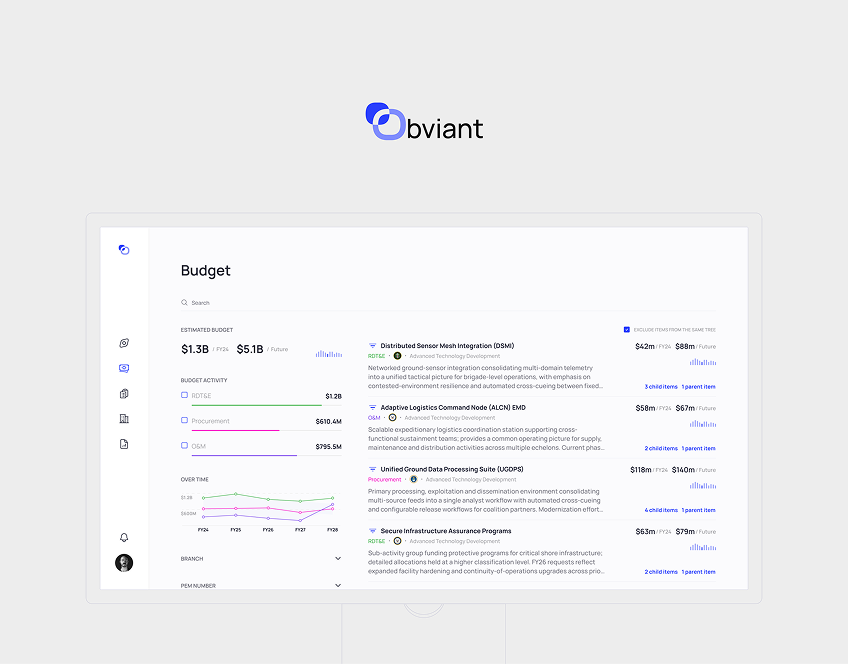
Obviant
Government contracting platform redesign. Four federal datasets — budget, contract, program, organization — unified into one searchable interface for capture managers and BD teams.
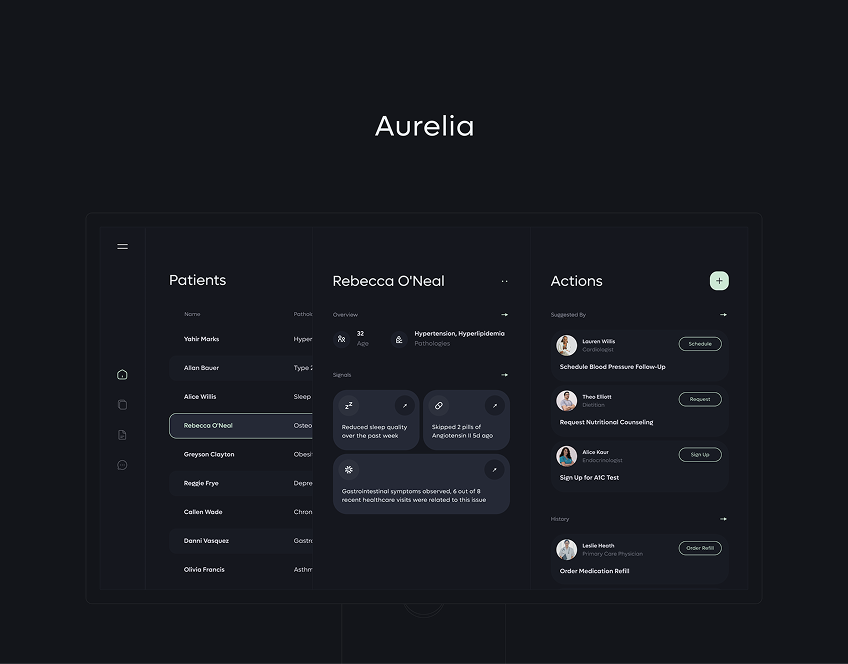
Aurelia
Full redesign of a dual-platform healthcare product for patients and providers. Patient onboarding completion: 24.6% → 43.9%. Provider core task: 11 → 5 steps. CSAT: 3.2 → 4.4/5.

SmartTID
EU accessibility audit for a workforce time-registration terminal. 210 WCAG criteria evaluated against three standards, severity-ranked, delivered as VPAT 2.5.
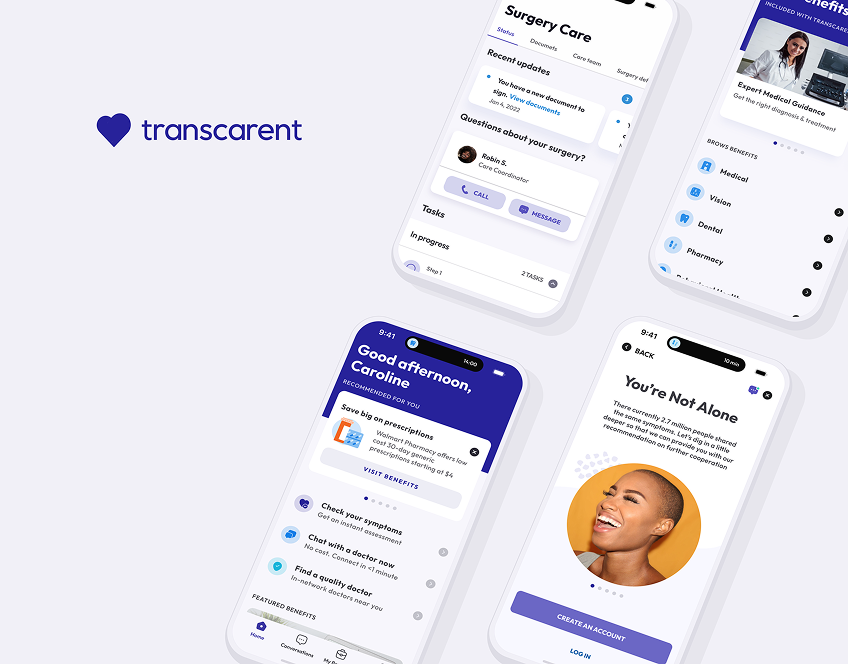
Transcarent
A consumer healthcare app integrating virtual care, providers, and local facilities, with a medicine-matching system. Result: 4.7 App Store rating, 24% saved by members on substitute medicines.