Core hours
Reserved designer hours each month
(typically
40–80 hrs). Your
features get designed
on
schedule, not “when the agency has
availability”.

Design retainer
Ongoing design support — dedicated senior hours, system governance,
continuous UX improvement — without the overhead of a full-time hire.
WHAT A RETAINER INCLUDES
I.
A SaaS design retainer gives your team
reserved,
ongoing design capacity —
dedicated designer
hours plus design-
system governance
and continuous UX
improvement — for a fixed
monthly fee,
without the cost and commitment
of a full-time hire. Unlike a project, it
doesn’t end;
the same team accumulates
context month over
month and stays
accountable for outcomes.
A typical
retainer covers four things.
Reserved designer hours each month
(typically
40–80 hrs). Your
features get designed
on
schedule, not “when the agency has
availability”.
New components, token updates, documentation,
and governance
reviews.
Your design system stays
alive and useful instead of
decaying into
an outdated Figma file.
Monthly UX audits of new features, usability testing
of recent
releases, and design debt
tracking.
We catch UX regressions before
your users do.
Quarterly roadmap alignment sessions. We review
your product
roadmap and flag design
challenges
early — before they become
engineering
bottlenecks.
RETAINER MODELS
II.
A dedicated designer who joins your
standups,
knows your
codebase constraints,
and designs
within your design system.
Feels like an in-house
hire. Costs like
a fraction of one.
[40-80] hrs/mo
Focused on keeping your component library,
tokens,
and documentation current as
your product
evolves.
Includes monthly
audits, new component
creation,
and
contributor review.
[20-40] hrs/mo
SEE DESIGN SYSTEMS PRACTICELightweight strategic layer. Design reviews,
accessibility
spot-checks, and quarterly
UX audits.
For teams that have internal
designers but need
senior oversight.
[10-20] hrs/mo
SEE UX AUDIT & ACCESSIBILITY DETAILSRETAINER VS PROJECT VS HIRE
III.
Projects end. When they do, you lose the designer
who knows your
product, your users,
and your
design system. A retainer preserves
continuity
and
institutional knowledge.
A senior product designer costs $120–180K/yr
fully
loaded
(salary + benefits + equipment
+
management overhead). A retainer
at 60 hrs/mo
costs a fraction — and you get a team,
not a single
point of failure. If your design needs fluctuate
quarter to quarter,
a retainer
flexes with you.
Freelancers don’t know your product. Every
engagement starts with
onboarding.
A retainer
designer accumulates context month over
month
— by month 3 they’re faster
than any new hire
would be.
HOW RETAINERS START
IV.
The pattern: a client engages for a UX audit
or
product design. During the engagement,
we build
a design system. The client realizes
the system
needs ongoing governance —
and the product
needs continuous attention
as new features ship.
The retainer is the natural next step.
There’s no
re-onboarding, no new team
to brief — the same
people who built
the system keep running it.
FAQ
V.
A design retainer is an ongoing arrangement where a design team reserves a set amount of capacity for you each month — dedicated designer hours plus design-system upkeep and continuous UX work — in exchange for a fixed monthly fee. It's the alternative to one-off projects (which end and take their context with them) and to full-time hires (which are expensive and inflexible). The defining benefit is continuity: the same team keeps your product and design system improving sprint over sprint, and by a few months in they know your codebase and users well enough to move faster than any new hire could.
A design retainer is an ongoing arrangement where a design team reserves a set amount of capacity for you each month — dedicated designer hours plus design-system upkeep and continuous UX work — in exchange for a fixed monthly fee. It's the alternative to one-off projects (which end and take their context with them) and to full-time hires (which are expensive and inflexible). The defining benefit is continuity: the same team keeps your product and design system improving sprint over sprint, and by a few months in they know your codebase and users well enough to move faster than any new hire could.
A design retainer is an ongoing arrangement where a design team reserves a set amount of capacity for you each month — dedicated designer hours plus design-system upkeep and continuous UX work — in exchange for a fixed monthly fee. It's the alternative to one-off projects (which end and take their context with them) and to full-time hires (which are expensive and inflexible). The defining benefit is continuity: the same team keeps your product and design system improving sprint over sprint, and by a few months in they know your codebase and users well enough to move faster than any new hire could.
A design retainer is an ongoing arrangement where a design team reserves a set amount of capacity for you each month — dedicated designer hours plus design-system upkeep and continuous UX work — in exchange for a fixed monthly fee. It's the alternative to one-off projects (which end and take their context with them) and to full-time hires (which are expensive and inflexible). The defining benefit is continuity: the same team keeps your product and design system improving sprint over sprint, and by a few months in they know your codebase and users well enough to move faster than any new hire could.
Retainers typically run 10–80 hours a month depending on the model — a lightweight UX-advisory tier (10–20 hrs), a design-system-governance tier (20–40 hrs), or an embedded-designer tier (40–80 hrs). Capacity is sized to your actual design demand, and because product needs fluctuate quarter to quarter, the retainer flexes with you rather than locking you into a fixed project scope. We review the fit at each quarterly check-in and adjust the tier as your needs change.
Retainers typically run 10–80 hours a month depending on the model — a lightweight UX-advisory tier (10–20 hrs), a design-system-governance tier (20–40 hrs), or an embedded-designer tier (40–80 hrs). Capacity is sized to your actual design demand, and because product needs fluctuate quarter to quarter, the retainer flexes with you rather than locking you into a fixed project scope. We review the fit at each quarterly check-in and adjust the tier as your needs change.
Retainers typically run 10–80 hours a month depending on the model — a lightweight UX-advisory tier (10–20 hrs), a design-system-governance tier (20–40 hrs), or an embedded-designer tier (40–80 hrs). Capacity is sized to your actual design demand, and because product needs fluctuate quarter to quarter, the retainer flexes with you rather than locking you into a fixed project scope. We review the fit at each quarterly check-in and adjust the tier as your needs change.
Retainers typically run 10–80 hours a month depending on the model — a lightweight UX-advisory tier (10–20 hrs), a design-system-governance tier (20–40 hrs), or an embedded-designer tier (40–80 hrs). Capacity is sized to your actual design demand, and because product needs fluctuate quarter to quarter, the retainer flexes with you rather than locking you into a fixed project scope. We review the fit at each quarterly check-in and adjust the tier as your needs change.
A senior in-house product designer costs roughly $120–180K/year fully loaded once you add benefits, equipment, and management overhead — and is a single point of failure. A retainer costs a fraction of that for comparable senior capacity, and you get a team (designer, systems engineer, researcher) rather than one person. It's most efficient when your design needs are real but don't justify a full-time headcount, or when they vary too much to staff with a permanent hire.
A senior in-house product designer costs roughly $120–180K/year fully loaded once you add benefits, equipment, and management overhead — and is a single point of failure. A retainer costs a fraction of that for comparable senior capacity, and you get a team (designer, systems engineer, researcher) rather than one person. It's most efficient when your design needs are real but don't justify a full-time headcount, or when they vary too much to staff with a permanent hire.
A senior in-house product designer costs roughly $120–180K/year fully loaded once you add benefits, equipment, and management overhead — and is a single point of failure. A retainer costs a fraction of that for comparable senior capacity, and you get a team (designer, systems engineer, researcher) rather than one person. It's most efficient when your design needs are real but don't justify a full-time headcount, or when they vary too much to staff with a permanent hire.
A senior in-house product designer costs roughly $120–180K/year fully loaded once you add benefits, equipment, and management overhead — and is a single point of failure. A retainer costs a fraction of that for comparable senior capacity, and you get a team (designer, systems engineer, researcher) rather than one person. It's most efficient when your design needs are real but don't justify a full-time headcount, or when they vary too much to staff with a permanent hire.
It stays alive. The most common failure mode for a design system is decay — it ships once, then drifts out of sync as the product evolves and new components get built ad hoc. A retainer includes governance: new components, token updates, documentation, and contributor review on a regular cadence, so the system keeps doing its job (consistency, speed, fewer one-off decisions) instead of becoming an outdated Figma file nobody trusts.
It stays alive. The most common failure mode for a design system is decay — it ships once, then drifts out of sync as the product evolves and new components get built ad hoc. A retainer includes governance: new components, token updates, documentation, and contributor review on a regular cadence, so the system keeps doing its job (consistency, speed, fewer one-off decisions) instead of becoming an outdated Figma file nobody trusts.
It stays alive. The most common failure mode for a design system is decay — it ships once, then drifts out of sync as the product evolves and new components get built ad hoc. A retainer includes governance: new components, token updates, documentation, and contributor review on a regular cadence, so the system keeps doing its job (consistency, speed, fewer one-off decisions) instead of becoming an outdated Figma file nobody trusts.
It stays alive. The most common failure mode for a design system is decay — it ships once, then drifts out of sync as the product evolves and new components get built ad hoc. A retainer includes governance: new components, token updates, documentation, and contributor review on a regular cadence, so the system keeps doing its job (consistency, speed, fewer one-off decisions) instead of becoming an outdated Figma file nobody trusts.
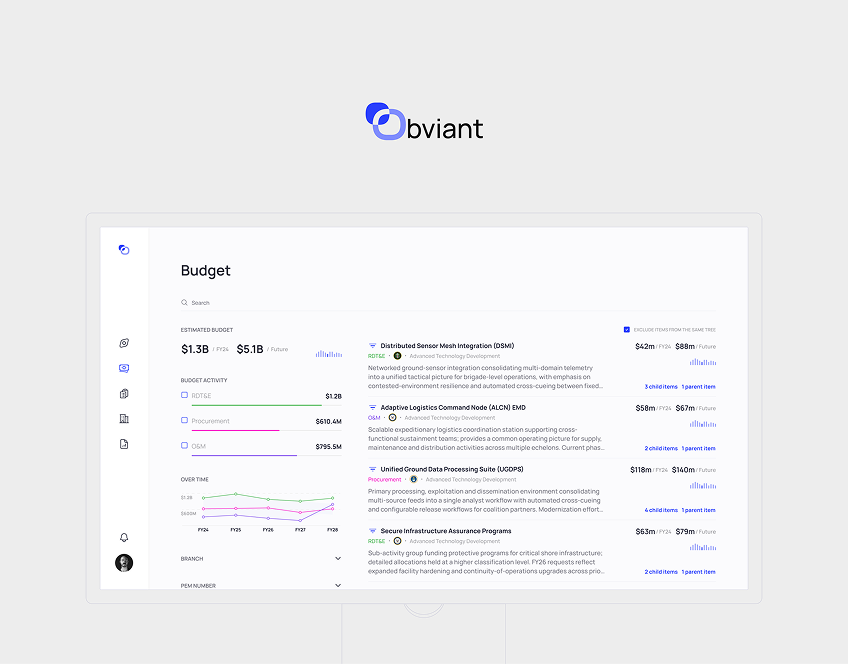
We modernized a defense-procurement and logistics platform built on a legacy warehouse-management interface. Result: 58% fewer dispatch errors (3.8% → 1.6%), 44% faster task completion, training cut from 3 months to 5 weeks.
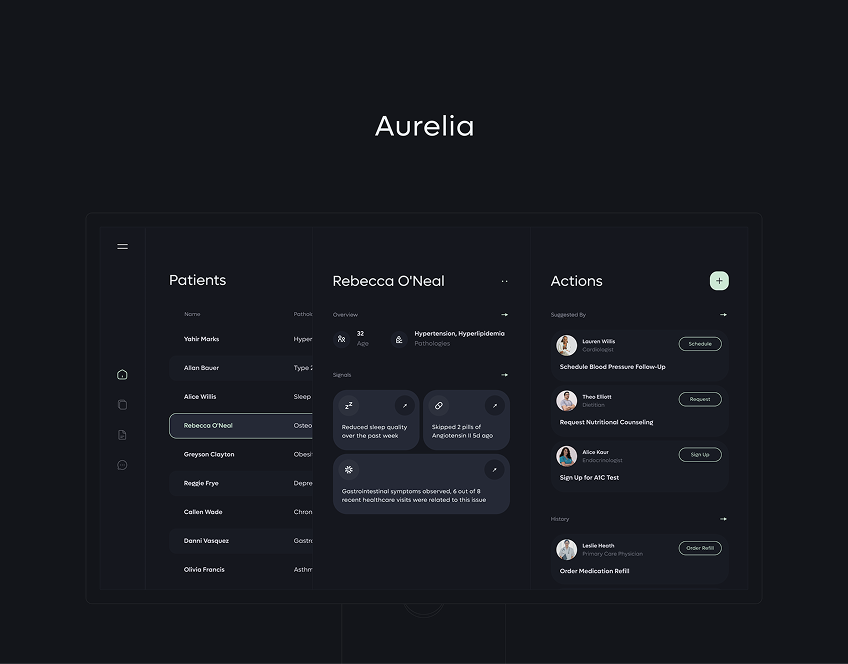
A dual-platform product — patient mobile app + provider clinical dashboard — with AI-powered health monitoring. Result: 97% provider efficiency boost, 80K+ health signals processed monthly, 2,000+ lives improved.
We modernized a defense-procurement and logistics platform built on a legacy warehouse-management interface. Result: 58% fewer dispatch errors (3.8% → 1.6%), 44% faster task completion, training cut from 3 months to 5 weeks.
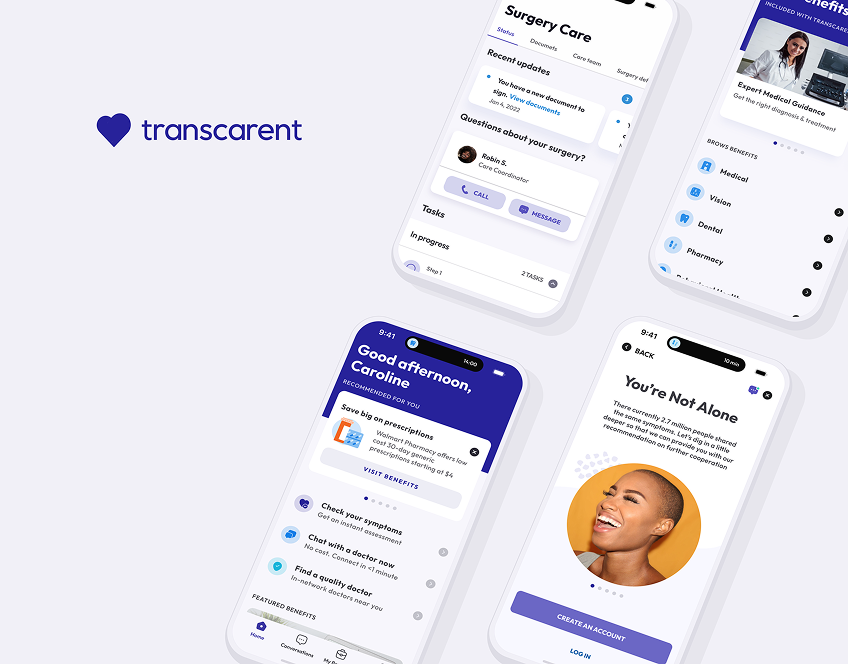
A consumer healthcare app integrating virtual care, providers, and local facilities, with a medicine-matching system. Result: 4.7 App Store rating, 24% saved by members on substitute medicines.