
An accessibility audit isn’t a checkbox
exercise.
A WCAG audit
evaluates your
product’s interface
against the full
WCAG 2.2 AA
standard — screen
reader
compatibility, keyboard navigation,
color
contrast, form labeling, error handling,
dynamic
content,
and focus management.
Every finding
is severity-rated and tied
to a specific
WCAG criterion.
SaaS accessibility audit
Find every accessibility
issue
before your users
or regulators do
Accessibility audit services for SaaS, tested against
WCAG 2.2 AA by hand —
the way disabled users
navigate, not the way a scanner reports.
From three weeks.
WHAT WE AUDIT
I.
A complete WCAG 2.2 AA
diagnostic of your SaaS interface
We audit your web/SaaS user interface
against
WCAG 2.2 AA
(Level A and AA).
We also assess
prerecorded media content
where present
(captions,
transcripts,
audio description).
What we
deliberately
don’t claim: hardware, kiosks, physical
devices,
and the broader EN 301 549
mechanical
chapters
are outside
this audit — those are different
disciplines,
and a focused audit done
thoroughly
beats
a broad one done shallowly. Where a finding
touches something beyond UI scope, we flag
it
and
point you
to the right specialist.
Our audit methodology maps every finding
to three
dimensions
simultaneously:
WCAG 2.2 AA criteria,
EAA/ADA regulatory
exposure, and business impact
(user friction × audience size).
The deliverable
isn’t a checkbox report —
it’s a severity-ranked
remediation plan:
-
Prioritized findings report with severity
ratings
(critical,
major, minor) —
each tied
to a specific
WCAG criterion
and
its regulatory exposure
(we translate
“2.4.7 fail” into
the language
procurement
and legal
actually act on). -
VPAT/ACR documentation —
the accessibility
conformance report
enterprise procurement
teams
increasingly require from SaaS
vendors
before signing. -
A remediation roadmap with estimated
engineering
effort and expected
compliance
impact for each fix. -
Three “quick wins” you can implement
within
the first
week —
the highest-impact,
lowest-effort
changes
identified in the audit.
This is the audit: we find every issue, map it
to the standard
and the regulation, and
design
the recommended fix.
We don’t
implement
the changes inside the audit —
implementation
is a separate, optional
remediation engagement
(below).
That boundary keeps the audit fast,
fixed-scope,
and clean to procure.
Starting at three weeks from kickoff
to delivered
report.
Scope and pricing
confirmed on a call
based
on the number
of surfaces and standards
required.
A real audit report from a real
engagement —
not a brochure.
See the exact deliverable format,
finding structure, and severity
ratings your
team
will receive.
WHO RUNS YOUR AUDIT
II.
Run by designers who test
the way
disabled
users
actually navigate
Most accessibility audits come from one
of two
places, and both have a gap.
Dedicated
accessibility
firms find issues
but hand
the redesign
back to you.
Generalist design
agencies rarely test
beyond
an automated scanner.
We sit
in the rare
middle:
a product design team
that runs audits
the manual
way —
with screen
readers and keyboard-
only
navigation, the way
people with disabilities
actually
use software —
and then designs
the fixes.
Finding the problem
and designing
the solution
are the same
engagement,
not two vendors.
Manual testing, not
automated-only
Every audit includes hands-on testing with
NVDA, VoiceOver, and JAWS,
keyboard-only
navigation, and 200% / 400% zoom —
the failure modes
automated
scanners
structurally cannot catch. Automated tools
find
roughly a third
of WCAG issues;
the rest require a human navigating
the way
a disabled user does.
Mapped to the standard, not
to opinion
Every finding is tied to a specific
WCAG 2.2 AA success criterion and
severity-rated,
so your engineers know
exactly what failed, why it matters,
and what
“fixed” looks like.
Audited at depth
[N]+ SaaS platforms taken through a full WCAG 2.2 AA review.
We design the remediation
Because we’re a product team,
the deliverable doesn’t stop at a list
of failures —
we design the compliant
alternative for every critical and
high-severity finding.
That’s the half
dedicated audit shops don’t do.
Named lead on every audit
Placeholder
Find out before it
becomes
a legal problem
REGULATORY LANDSCAPE
III.
What the EAA means
for SaaS companies
The European Accessibility Act (EAA)
enforcement
began June 2025. ADA Title III
applies to US digital
products. Companies
face fines, lawsuits, market
access
restrictions, and enterprise
procurement
disqualification. Enterprises
are already
requiring
VPAT/ACR from SaaS
vendors.
This isn’t theoretical —
it’s operational.
AFTER THE AUDIT
IV.
From findings to compliant product
The audit tells you where you stand.
What happens
next depends on your
team, your timeline, and how
deep
the gaps run.
An audit without execution is a document
on a shelf. After we deliver findings, we can
help implement them — either as a focused
remediation sprint (4–8 weeks) or as part
of a broader product redesign. Many of our
longest client relationships started with
a single audit.
PATH I
Implement quick wins in-house using our prioritized roadmap.
Take the prioritized roadmap and implement
the quick wins in-house.
PATH II
Engage us for remediation —
we design the fixes,
your engineers implement.
Engage us for a focused remediation sprint —
we fix the top findings in 4–8 weeks.
PATH III
Commission ongoing compliance monitoring
as part
of a design retainer.
Commission a full product redesign, using the audit
as the diagnostic foundation.
THE ENGAGEMENT PATH
V.
The accessibility
engagement path
engagement path
Accessibility isn’t a one-time fix —
it’s an ongoing
discipline. Every feature
release can introduce
regressions.
Every WCAG version update adds
new
criteria. Here’s how most accessibility
engagements
evolve:
Weeks 1–3
Your WCAG 2.2 AA audit, delivered via
the EAA-Ready Audit Framework:
severity-ranked findings, VPAT/ACR
documentation for procurement, and
three
quick wins to implement
immediately.
Audit delivered. Quick wins implemented in-house.
Engineering team begins working through
the remediation roadmap.
Months 2–4
Optional remediation. We design
compliant
alternatives for the critical
and major findings.
Your engineers
implement, or we manage
both
through the compliance practice —
and a re-audit
verifies conformance.
Ongoing
Optional ongoing retainer. Quarterly
regression
checks, VPAT updates after
each
major release,
and compliance
monitoring
as EAA enforcement
evolves across
EU member states.
FAQ
VI.
Common questions
Verify pricing — audits are scoped in two shapes: a single-surface audit covering
one core product surface, and a full-platform audit with complete VPAT/ACR
documentation. Both are quoted on a call — no public price until productized
(single-price policy, Jul 2026). Retired figures for internal reference only: $7,500
and $12,000. We confirm the tier on a short discovery call once we understand
your component count, framework, and regulatory exposure (EAA, ADA, enterprise
procurement). Keep these figures identical across the site, the sample kit, and all
outbound copy.
Verify pricing — audits are scoped in two shapes: a single-
surface audit covering one core product surface, and a full-
platform audit with complete VPAT/ACR documentation. Both
are quoted on a call — no public price until productized (single-
price policy, Jul 2026). Retired figures for internal reference
only: $7,500 and $12,000. We confirm the tier on a short
discovery call once we understand your component count,
framework, and regulatory exposure (EAA, ADA, enterprise
procurement). Keep these figures identical across the site,
the sample kit, and all outbound copy.
Verify pricing — audits are scoped in two shapes: a single-surface audit covering one core product
surface, and a full-platform audit with complete VPAT/ACR documentation. Both are quoted
on a call — no public price until productized (single-price policy, Jul 2026). Retired figures
for internal reference only: $7,500 and $12,000. We confirm the tier on a short discovery call once
we understand your component count, framework, and regulatory exposure (EAA, ADA, enterprise
procurement). Keep these figures identical across the site, the sample kit, and all outbound copy.
Verify pricing — audits are scoped in two
shapes: a single-surface audit covering one
core product surface, and a full-platform audit
with complete VPAT/ACR documentation. Both
are quoted on a call — no public price until
productized (single-price policy, Jul 2026).
Retired figures for internal reference only:
$7,500 and $12,000. We confirm the tier
on a short discovery call once we understand
your component count, framework,
and regulatory exposure (EAA, ADA, enterprise
procurement). Keep these figures identical
across the site, the sample kit, and all
outbound copy.
Every WCAG 2.2 AA success criterion that applies to your product, tested by hand
across keyboard, screen reader, zoom, and contrast — plus the EAA and ADA
mapping your procurement team will be asked for.
Every WCAG 2.2 AA success criterion that applies to your
product, tested by hand across keyboard, screen reader, zoom,
and contrast — plus the EAA and ADA mapping your
procurement team will be asked for.
Every WCAG 2.2 AA success criterion that applies to your product, tested by hand across
keyboard, screen reader, zoom, and contrast — plus the EAA and ADA mapping your procurement
team will be asked for.
Every WCAG 2.2 AA success criterion that
applies to your product, tested by hand
across keyboard, screen reader, zoom, and
contrast — plus the EAA and ADA mapping
your procurement team will be asked for.
Starting at three weeks end to end: roughly two weeks for the audit itself, then from
one week to compile the findings, recommendations, VPAT/ACR, and walkthrough.
You get the full report and a live walkthrough at the end of week three.
Starting at three weeks end to end: roughly two weeks
for the audit itself, then from one week to compile the findings,
recommendations, VPAT/ACR, and walkthrough. You get the full
report and a live walkthrough at the end of week three.
Starting at three weeks end to end: roughly two weeks for the audit itself, then from one week
to compile the findings, recommendations, VPAT/ACR, and walkthrough. You get the full report
and a live walkthrough at the end of week three.
Starting at three weeks end to end: roughly
two weeks for the audit itself, then from one
week to compile the findings,
recommendations, VPAT/ACR,
and walkthrough. You get the full report and
a live walkthrough at the end of week three.
WCAG 2.2 AA (the current standard), with every finding mapped to EAA and ADA
Title III exposure. Scope is your web/SaaS interface plus prerecorded-media
content (captions, transcripts, audio description) where present; hardware, kiosks,
and physical-device requirements are out of scope by design. We also prepare
VPAT/ACR documentation for enterprise procurement.
WCAG 2.2 AA (the current standard), with every finding
mapped to EAA and ADA Title III exposure. Scope is your web/
SaaS interface plus prerecorded-media content (captions,
transcripts, audio description) where present; hardware, kiosks,
and physical-device requirements are out of scope by design.
We also prepare VPAT/ACR documentation for enterprise
procurement.
WCAG 2.2 AA (the current standard), with every finding mapped to EAA and ADA Title III exposure.
Scope is your web/SaaS interface plus prerecorded-media content (captions, transcripts, audio
description) where present; hardware, kiosks, and physical-device requirements are out of scope
by design. We also prepare VPAT/ACR documentation for enterprise procurement.
WCAG 2.2 AA (the current standard), with
every finding mapped to EAA and ADA Title III
exposure. Scope is your web/SaaS interface
plus prerecorded-media content (captions,
transcripts, audio description) where present;
hardware, kiosks, and physical-device
requirements are out of scope by design.
We also prepare VPAT/ACR documentation
for enterprise procurement.
The audit itself is diagnosis and design recommendation — we find every issue,
map it, and design the recommended fix, but we don't implement inside the audit.
Implementation is a separate, optional remediation engagement where we design
the compliant alternatives and your engineers build them (or we manage both) —
and a re-audit afterward verifies conformance. → /compliance
The audit itself is diagnosis and design recommendation —
we find every issue, map it, and design the recommended fix,
but we don't implement inside the audit. Implementation
is a separate, optional remediation engagement where
we design the compliant alternatives and your engineers build
them (or we manage both) — and a re-audit afterward verifies
conformance. → /compliance
The audit itself is diagnosis and design recommendation — we find every issue, map it, and design
the recommended fix, but we don't implement inside the audit. Implementation is a separate,
optional remediation engagement where we design the compliant alternatives and your engineers
build them (or we manage both) — and a re-audit afterward verifies conformance. → /compliance
The audit itself is diagnosis and design
recommendation — we find every issue, map
it, and design the recommended fix, but we
don't implement inside the audit.
Implementation is a separate, optional
remediation engagement where we design
the compliant alternatives and your engineers
build them (or we manage both) —
and a re-audit afterward verifies conformance.
→ /compliance
Internal teams often develop audit blindness — they've been too close
to the product for too long. An external audit finds the issues your team
has normalized, and produces the independent VPAT/ACR that procurement
and legal will actually trust.
Internal teams often develop audit blindness — they've been
too close to the product for too long. An external audit finds
the issues your team has normalized, and produces
the independent VPAT/ACR that procurement and legal will
actually trust.
Internal teams often develop audit blindness — they've been too close to the product for too long.
An external audit finds the issues your team has normalized, and produces the independent VPAT/
ACR that procurement and legal will actually trust.
Internal teams often develop audit blindness —
they've been too close to the product
for too long. An external audit finds the issues
your team has normalized, and produces
the independent VPAT/ACR that procurement
and legal will actually trust.
Need full compliance remediation?
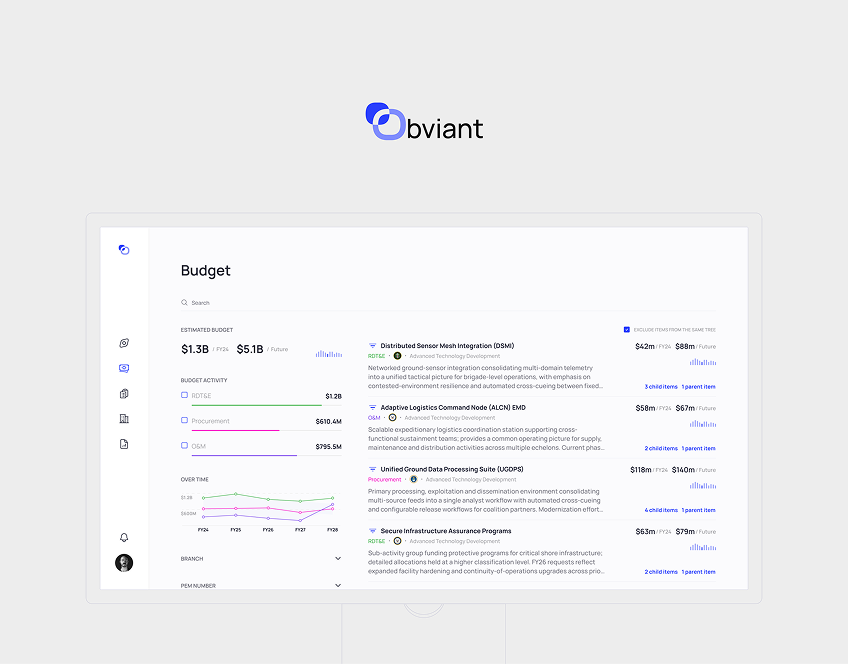
Obviant
Government contracting platform redesign. Four federal datasets — budget, contract, program, organization — unified into one searchable interface for capture managers and BD teams.
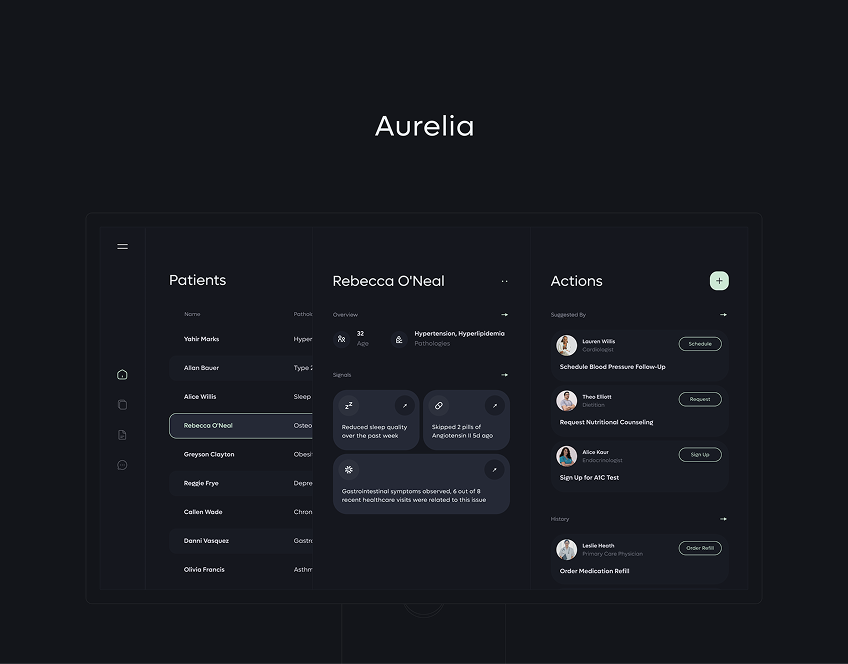
Aurelia
Full redesign of a dual-platform healthcare product for patients and providers. Patient onboarding completion: 24.6% → 43.9%. Provider core task: 11 → 5 steps. CSAT: 3.2 → 4.4/5.
SmartTID
EU accessibility audit for a workforce time-registration terminal. 210 WCAG criteria evaluated against three standards, severity-ranked, delivered as VPAT 2.5.
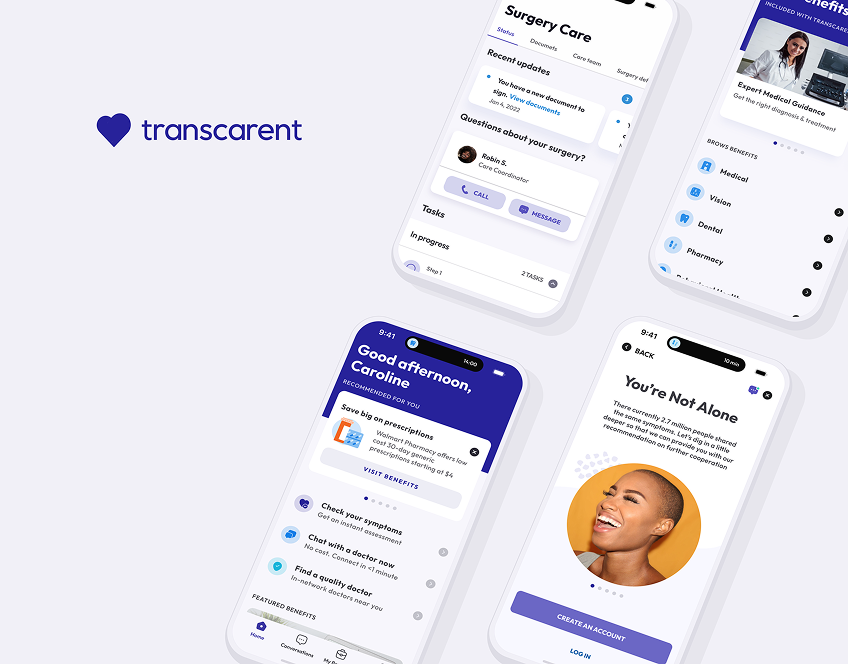
Transcarent
A consumer healthcare app integrating virtual care, providers, and local facilities, with a medicine-matching system. Result: 4.7 App Store rating, 24% saved by members on substitute medicines.